Elijah Zadok Elijah Zadok

Why You’re a Different Size at Every Shop: COS vs H&M VS mango VS ASOS

We compared the official size charts of four UK high-street brands. The same body can be a UK 12 or a UK 16 depending on the label. Here's the data.

WHY YOU'RE A DIFFERENT SIZE AT EVERY SHOP

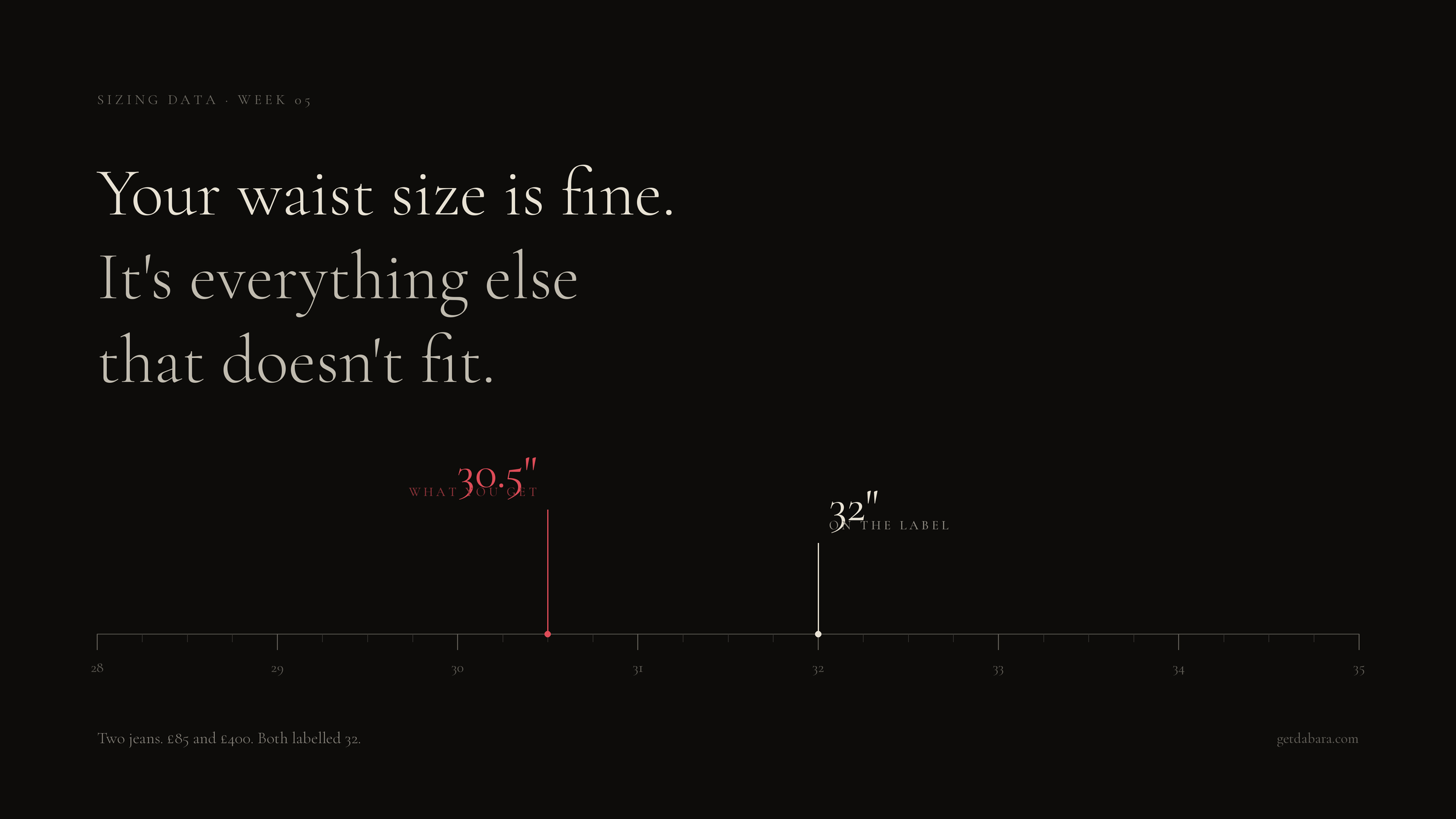
You order your usual size. It arrives. It doesn't fit. You order the same size somewhere else — and that one's too big. You start to wonder if the problem is you.

It isn't. The problem is that "UK 12" doesn't mean one thing. It means whatever each brand decided it should mean. We pulled the official body measurements from four of the UK's most-shopped brands and put the numbers side by side. The gaps are bigger than most people would ever guess.

One body, four different sizes

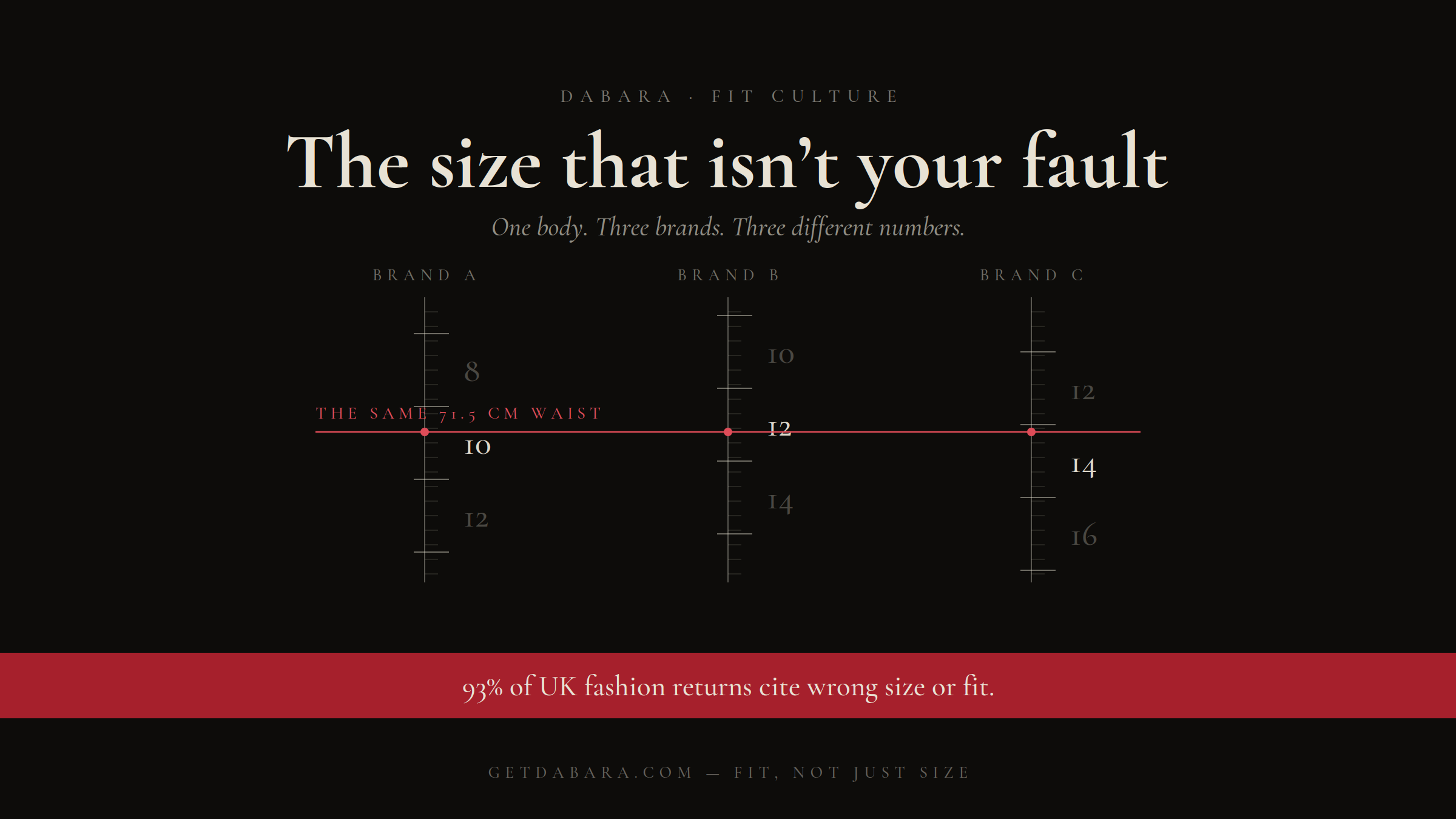
Take a woman with a 76cm waist. Here's the size each brand says she is:

- COS — UK 12

- Mango — UK 12

- H&M — UK 14

- ASOS — between 12 and 14

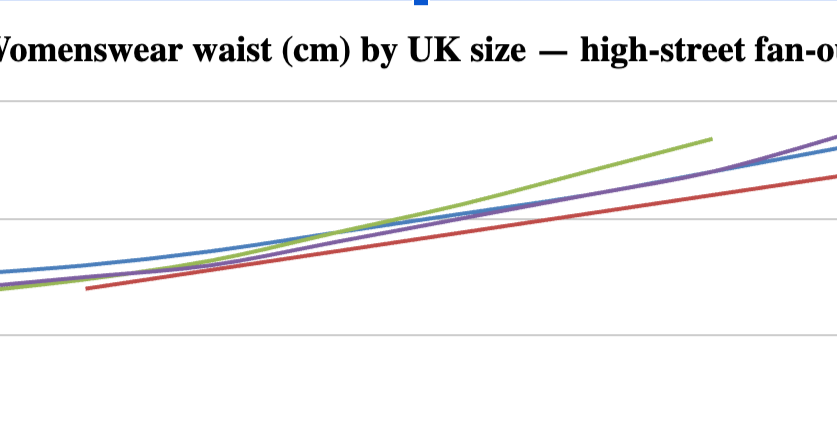
Now nudge that waist to 80cm and the spread gets wider: a UK 12 at Mango, a UK 14 at COS and ASOS, a UK 16 at H&M. Same body. A two-size swing depending on whose label you're reading.

The brands drift apart as sizes go up

At the smaller end, the four more or less agree — at a UK 6, every one expects a waist between 60 and 65cm. But the bigger the size, the more they disagree. By UK 16, a "size 16" waist is 80cm at H&M and 92cm at Mango — a 12cm gap on the exact same number. The label gets less reliable the further up the range you go.

How each brand runs

- H&M runs the smallest body per label — which is why so many people size up here.

- Mango runs the largest, and climbs fast as the range goes up.

- COS sits in the middle with even steps, but cuts many pieces deliberately loose — so the garment can wear bigger than the measurement suggests.

- ASOS tracks close to COS and lands mid-pack.


And this is before the clothes are even cut!


Everything above is body measurements. The garment adds another layer: a relaxed shirt and a fitted top in the "same" size wear nothing alike, because the ease in the cut differs, and fabric stretch moves the goalposts again. Fit is the measurement plus the cut plus how you like things to sit on you — and that last part is personal.

What to do with it

1. Stop trusting the label across brands. Learn your measurements once.

2. Watch the mid-to-upper range — the drift is widest there.

3. Factor in the cut, not just the size.

This is exactly the problem we're building Dabara to solve: not just translating your size from shop to shop, but learning how you like things to fit. Dress like it was made for you. Fewer returns. More good days.


Join the waitlist → getdabara.com

Measurements sourced from each brand's official size guide, June 2026.

Read More