
The size that isn't your fault
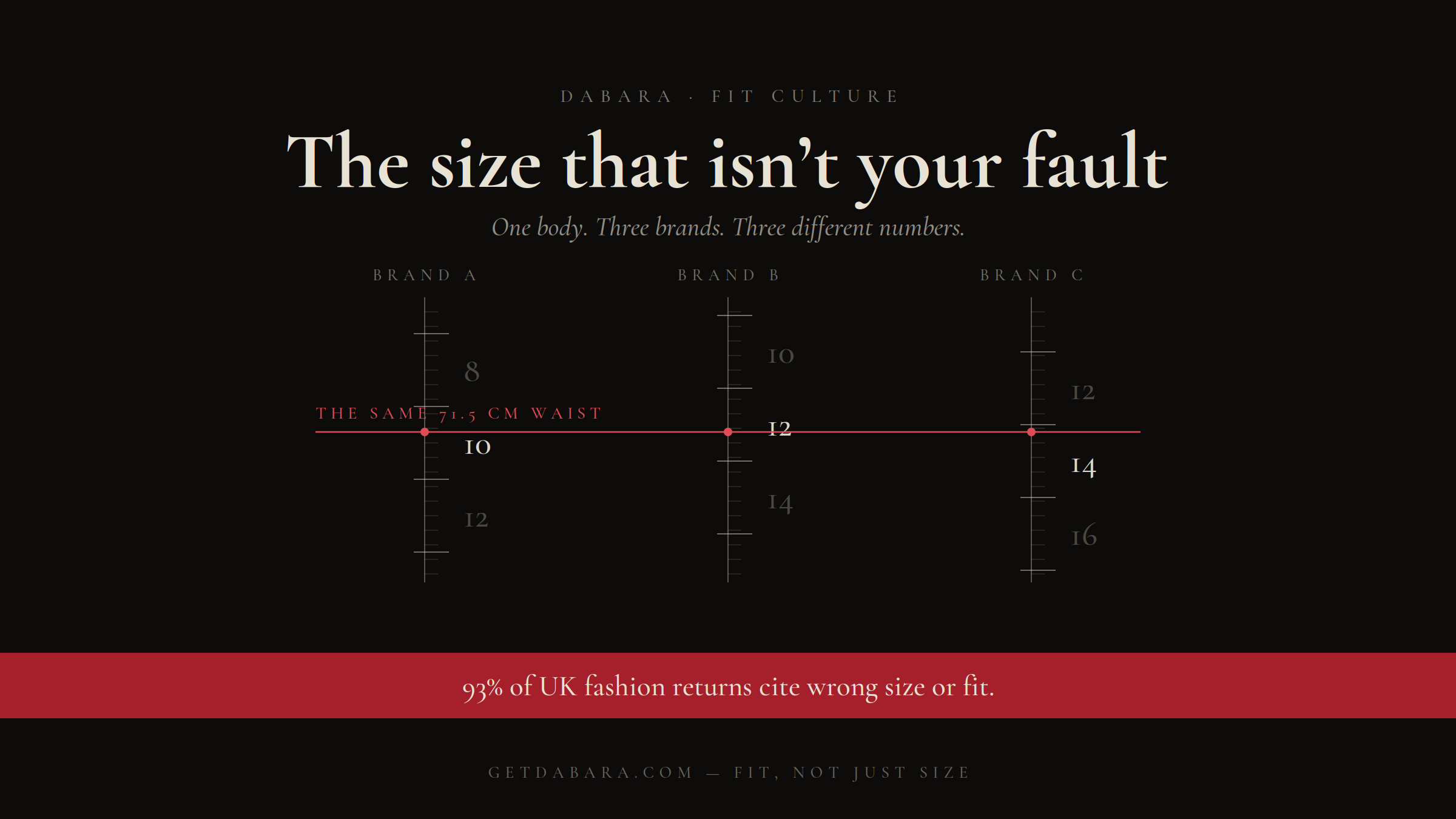
You are one body. So why are you a 10 in one shop, a 12 in the next, and a 14 across the street?
The uncomfortable answer: the number on the label was never a measurement of you. There is no standard behind it. Every brand draws its own size chart, drifts it over time, and grades it differently across garments. The label is a house rule, not a ruler. When your "size" doesn't fit, nothing about your body failed — the number did.
That would just be an annoyance if the number didn't carry so much weight. But it does, and the research is blunt about it. A pair of studies in the Journal of Consumer Psychology found that size labels act directly on how people see themselves: smaller labels prompt people to picture themselves more positively, while needing a larger size than expected measurably lowers appearance self-esteem — and sours how shoppers feel about the garment itself. The researchers point out why this keeps happening: because sizing standards vary so much between retailers, running into a larger-than-expected number isn't a rare event. It's a routine feature of shopping.
Read that again. A number a brand invented, applied inconsistently by design, is quietly taxing how millions of people feel about their bodies — several times per shopping trip.
And the cost isn't only emotional. It's physical, and it's enormous.
When the British Fashion Council's Institute of Positive Fashion studied UK fashion returns with DHL and Roland Berger, the single biggest reason shoppers gave for sending clothes back was incorrect sizing or fit — cited by 93% of surveyed shoppers who had returned an online purchase. The same study put hard numbers on where those returns end up: in 2022, around 23 million returned garments were sent to landfill or incinerated in the UK, and the returns process generated roughly 750,000 tonnes of CO₂.
Zoom out to the whole wardrobe and it gets worse. WRAP's 2024 market research found that 49% of all used textiles in the UK go straight into general waste — about 35 items per person, every year. Of what's binned, 84% is incinerated and 11% goes to landfill. The UK now consumes more clothing per head than any other country in Europe.
Follow the chain: no sizing standard → wrong fit → return → and for millions of garments a year, a hole in the ground or a furnace. The same broken ruler that makes you doubt your body in a fitting room is filling landfill at industrial scale.
The fashion industry has mostly treated this as two separate problems — a customer-confidence problem for marketing, and a returns-logistics problem for operations. It's neither. It's one measurement problem. Shoppers are asked to guess, in someone else's units, and both the shopper and the planet absorb the cost of the guess.
The fix isn't more willpower in the fitting room, and it isn't another generic size chart. It's knowing the actual measurements of the garment and the actual measurements of the body before the two ever meet. Shoppers already know this: in the same BFC survey, 72% pointed to a size calculator based on their own body measurements as one of the features most likely to stop them returning. That's the entire idea behind Dabara: build your body profile once, and every item you browse arrives already measured against you — fit, not just size. The number on the label stops being a verdict and goes back to being what it should have been all along: irrelevant.
You were never three different sizes. You were handed three different rulers.
Dabara. Join the waitlist at getdabara.com.
